


System design interviews are no longer just about memorizing load balancer diagrams. In 2026, companies expect senior engineers to articulate deep architectural trade-offs, manage complex database schema evolutions, and handle system behavior under extreme stress.
The Hidden Risk of Schema Evolution
When designing distributed systems, one of the most dangerous tasks is evolving your database schemas or configuration files across microservices. A single mismatched JSON key or whitespace error in a YAML config can bring down a production cluster.
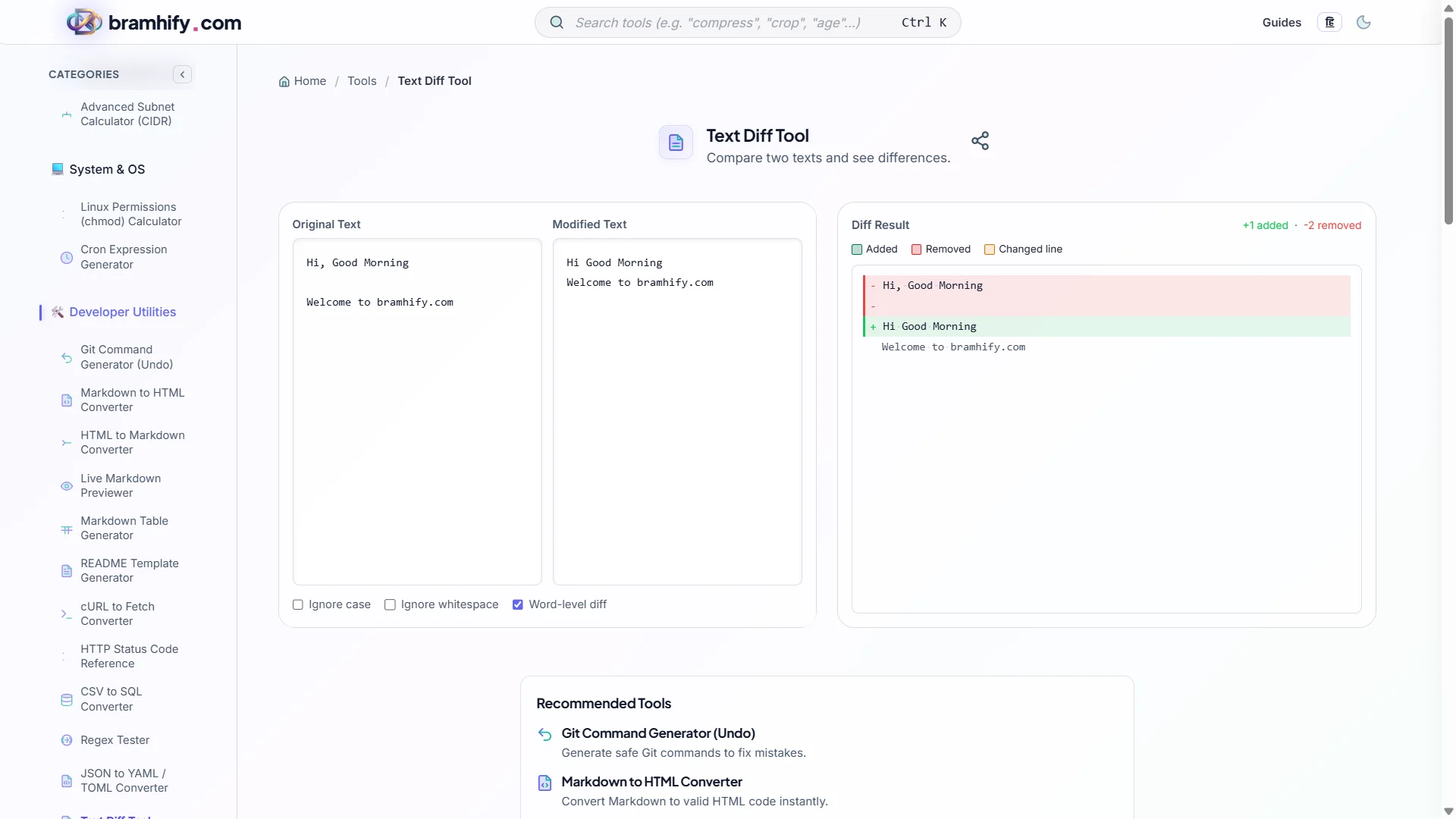
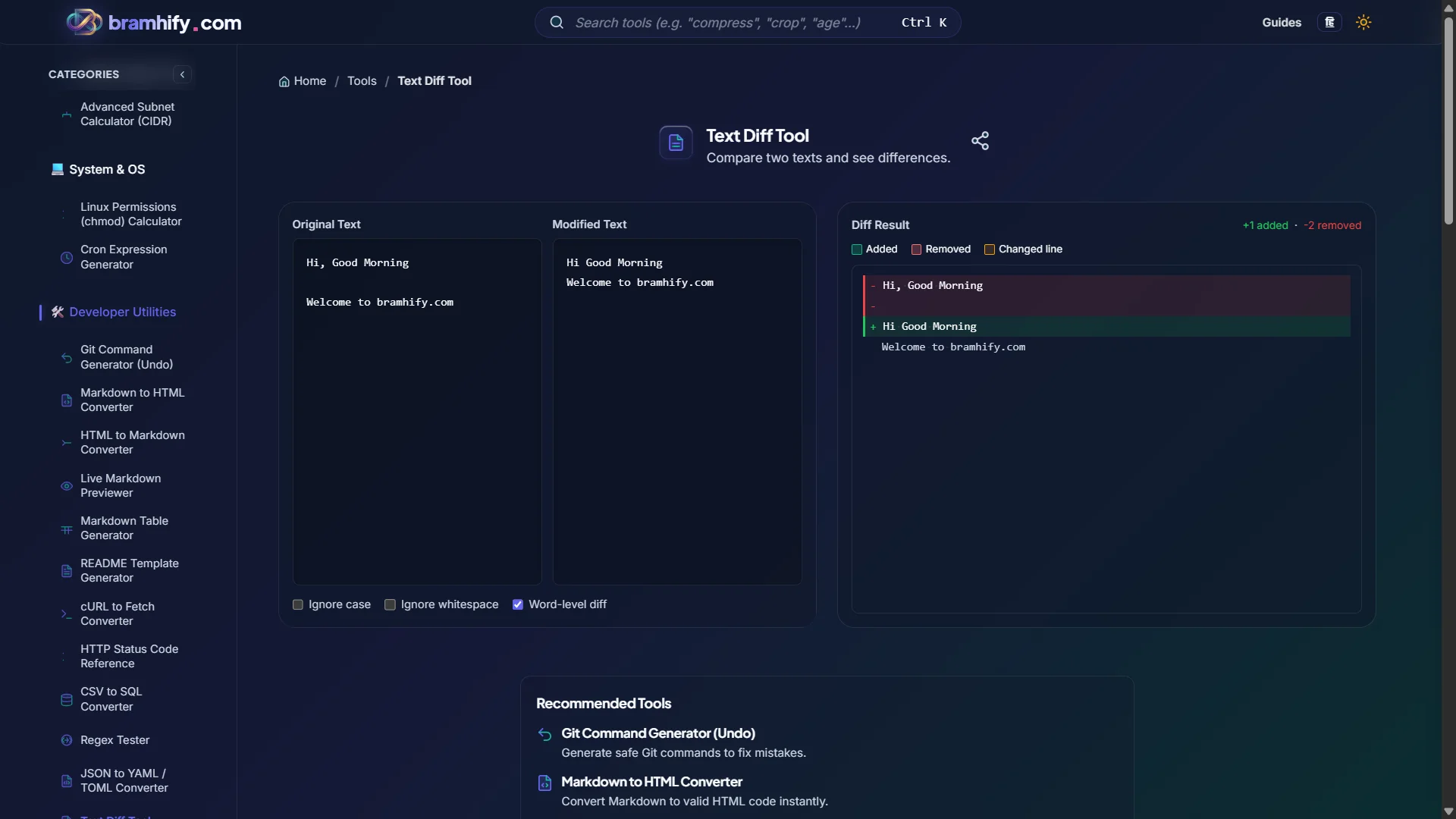
Relying on naked eye reviews for these critical changes is a recipe for disaster. But pasting your company's proprietary system architecture configs into a random online diff tool exposes your intellectual property to third-party servers. Bramhify's Text Diff Tool solves this by running 100% locally on your device.
Text Diff Tool:

Step-by-Step Guide to System Design Mastery
Here are the top resources to elevate your system design skills, alongside practical tips for reviewing complex architectures.
Step 1: Read the Gold Standard
Start by reading Designing Data-Intensive Applications by Martin Kleppmann. This book is widely considered the absolute prerequisite for understanding the underlying principles of distributed data systems, eventual consistency, and replication.
Step 2: Practice with ByteByteGo
Alex Xu's ByteByteGo platform offers visual, real-world teardowns of massive systems. It is the best resource for learning how to structure your thoughts during a live whiteboard interview.
Step 3: Master Configuration Reviews
As you build mock systems, practice reviewing configuration diffs. Open the Text Diff Tool and paste your original schema in the left panel, and your modified schema in the right panel.
Step 4: Validate Changes Locally
Review the green additions and red deletions. Use the word-level diff feature to catch tiny syntax changes. Because the tool runs offline, you can safely review proprietary configs without risk.
Frequently Asked Questions (FAQs)
What are the best system design learning resources?
In 2026, the best resources combine deep theory (Designing Data-Intensive Applications) with practical pattern recognition (ByteByteGo, Grokking the System Design Interview). Senior engineers should also read engineering blogs from Netflix, Uber, and Cloudflare to see how real-world architectures evolve.
Is my text data sent to a server when comparing diffs?
No, all comparisons are performed locally in your browser. Your sensitive code, private documents, and confidential configurations are never sent to any external server, ensuring 100% privacy and security.
How does the word-level diff work?
Word-level diff breaks down the lines of text into individual words and compares them. This allows you to see exactly which specific word or character was altered in a line, rather than just marking the entire line as changed.