


The highest-paid software engineering roles in 2026 are dominated by AI and Machine Learning. If you are currently a frontend or backend web developer, transitioning to an AI/ML engineering role is the smartest career move you can make.
The Hidden Risk of "Tutorial Hell"
When transitioning into AI, the biggest mistake developers make is jumping straight into massive tutorials for training Large Language Models (LLMs) from scratch. These tutorials often abstract away the foundational computer science principles.
To truly understand how neural networks process information, you must understand how data is broken down to its absolute lowest level—binary. Without grasping how raw text is encoded into 0s and 1s, concepts like tokenization, embeddings, and vector databases will remain a mystery.
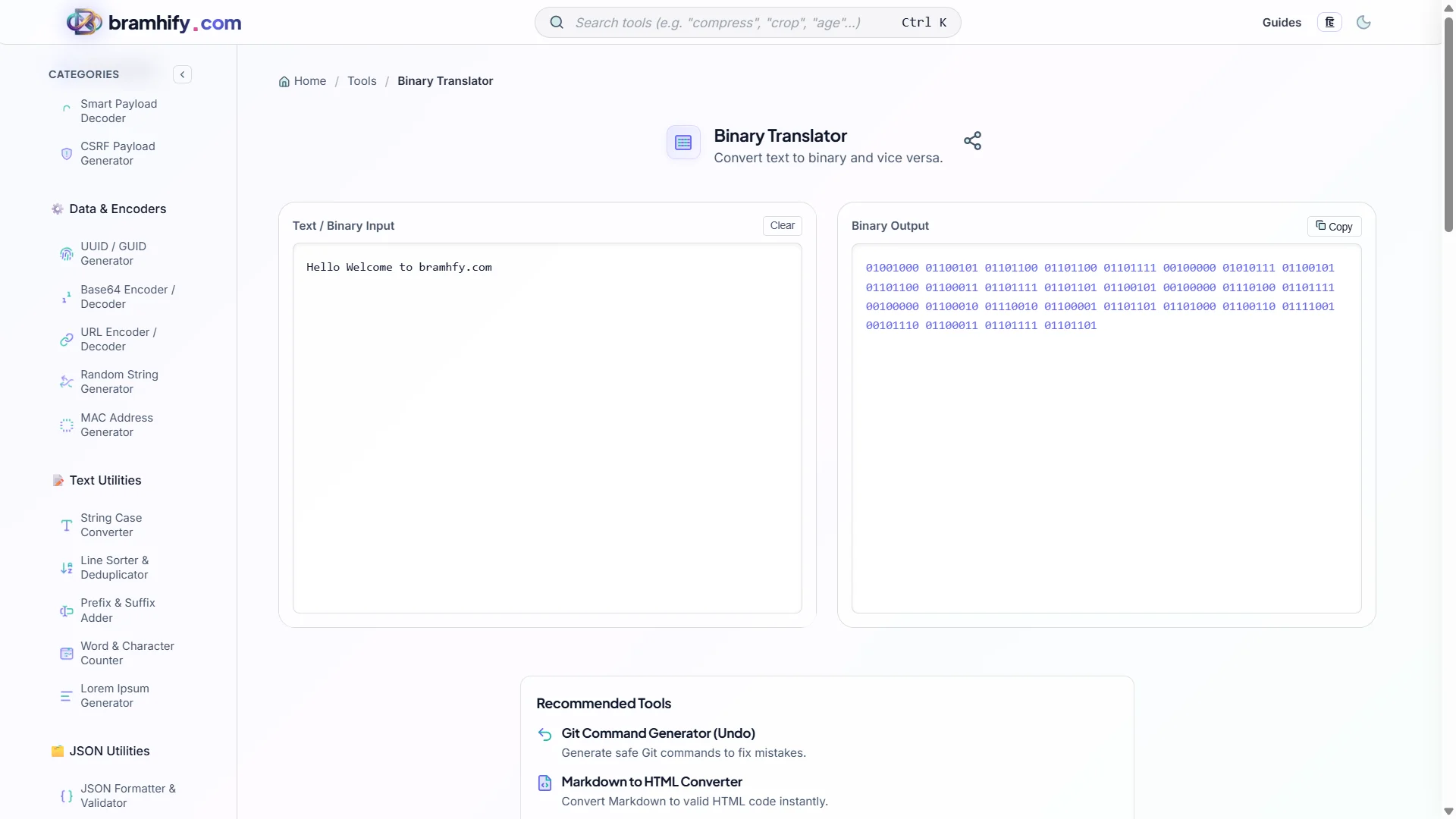
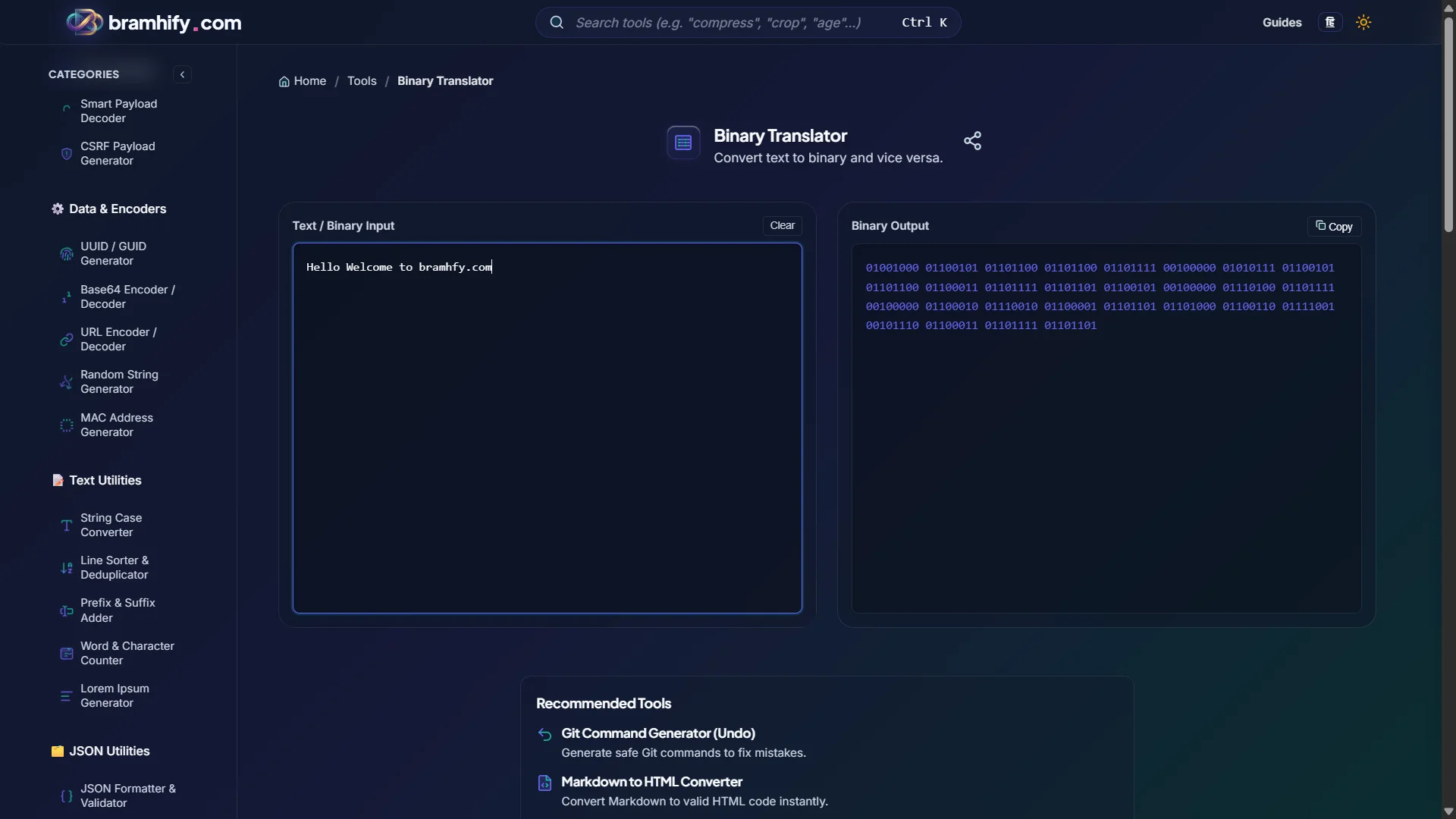
Bramhify's Binary Translator is the perfect sandbox for visualizing this low-level data encoding right in your browser.
Binary Translator:

Step-by-Step Roadmap to AI Engineering
Follow this structured roadmap to evolve from a web developer to a highly paid AI Engineer.
Step 1: Master Python and Data Structures
If you come from JavaScript or Java, your first step is mastering Python. It is the undisputed language of AI. Focus on understanding core data structures and how basic strings are represented in memory.
Step 2: Understand Tokenization and Encoding
Before you use LangChain, understand how words are converted to numbers. Open the Binary Translator and type a sentence. Watch how human-readable text is encoded into 8-bit binary chunks. This is the exact foundational concept behind how LLMs process tokens!
Step 3: Learn Retrieval-Augmented Generation (RAG)
In 2026, most AI jobs do not involve training foundational models. Instead, companies want engineers who can connect OpenAI APIs to proprietary company databases. Learning RAG architecture is your fastest ticket to getting hired.
Step 4: Build Full-Stack AI Apps
Combine your existing web development skills (React, Next.js) with your new Python backend skills to build end-to-end AI applications. A deployed, working AI portfolio project is worth more than a dozen certificates.
Frequently Asked Questions (FAQs)
How hard is the transition to AI ML engineering?
The transition is very achievable for existing developers. Since you already know version control, clean code principles, and deployment, you just need to bridge the gap with Python, RAG architectures, and vector databases.
Why do I need to understand binary encoding?
Machine learning models do not understand text; they understand numbers and mathematical vectors. Understanding how high-level text is encoded into binary helps you debug complex tokenization errors when building LLM pipelines.
What encoding does the binary translator use?
Our Binary Translator uses UTF-8 encoding by default. This ensures that a wide range of characters, including standard ASCII letters, numbers, symbols, and many international characters, are correctly translated to and from binary, mirroring real-world AI data ingestion.