
QA Automation continues to be one of the fastest and most accessible entry points into the IT industry for Indian freshers. With the rise of AI-assisted coding, companies are shipping features faster than ever, and the demand for skilled automation engineers who can test those features is at an all-time high.
While paid bootcamps will charge you thousands of rupees, the exact same curriculum is available for free on YouTube if you know where to look.
The Hidden Risk of Outdated Testing Practices
A major trap for freshers is learning outdated testing patterns from videos recorded in 2018. The industry has shifted massively. Hard-coded wait times (Thread.sleep()), fragile XPath selectors, and ignoring API testing are instant red flags in an interview. You need channels that teach modern frameworks like Playwright, CI/CD integration, and robust data validation.
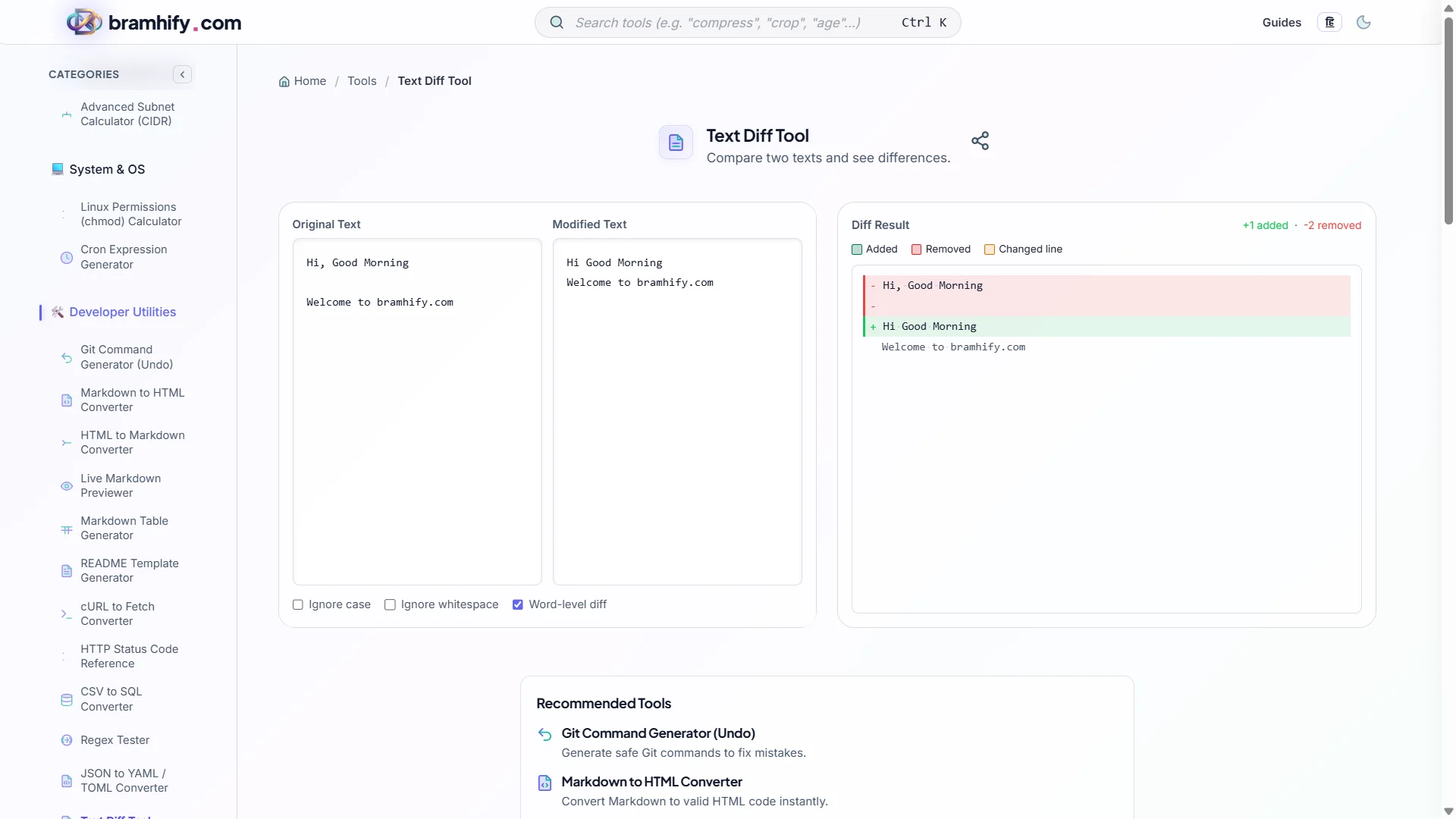
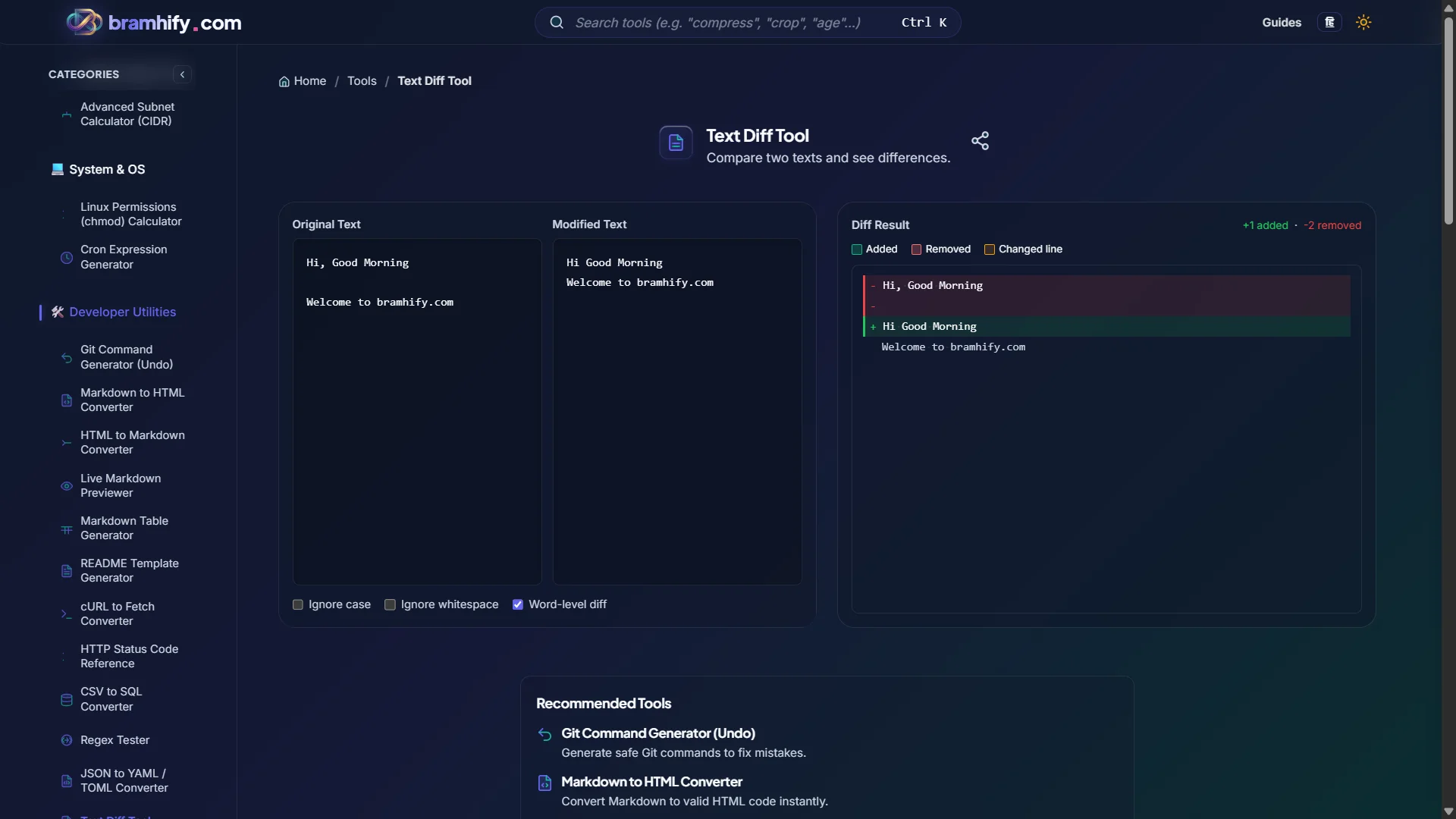
When you start writing automation scripts, you will frequently need to compare expected JSON responses against actual API payloads, or verify large blocks of text. Relying on heavy IDEs for quick diffs can slow you down.
Text Diff Checker:
The Top 5 YouTube Channels for Automation Testing
Here are the most up-to-date, high-quality channels to master UI and API automation in 2026.
1. Naveen AutomationLabs
Naveen is legendary in the Indian testing community. His playlists cover everything from core Java concepts to advanced Selenium Grid architectures. In 2026, his deep dives into Playwright with TypeScript are the absolute best starting point for modern UI testing.
2. Mukesh Otwani
If you prefer bite-sized, practical tutorials, Mukesh is excellent. He focuses heavily on real-world interview questions and how to set up automation frameworks from scratch. His recent series on API testing with RestAssured is mandatory viewing.
3. Let's Code It
This channel is fantastic for absolute beginners who need visual, step-by-step guidance. They break down complex topics like Page Object Model (POM) and BDD with Cucumber into easily digestible lessons that anyone can follow.
4. SDET - QA Automation Techie
This channel excels at teaching the ecosystem around automation. They don't just teach Selenium; they teach you how to integrate it with Jenkins, Docker, and Git. This end-to-end knowledge is what separates junior testers from senior automation engineers.
5. executeautomation
For those looking to learn Playwright with C# or dive into mobile testing with Appium, Karthik's channel is a goldmine. He often covers niche, cutting-edge topics that other channels miss, keeping you ahead of the curve.
Why the Industry is Shifting from Selenium to Playwright
For over a decade, Selenium was synonymous with automation testing. However, the modern web has become highly asynchronous, relying heavily on Single Page Applications (SPAs) built with React, Vue, or Angular. This shift exposed Selenium's biggest weakness: flakey tests due to hard-coded waits and synchronization issues.
Microsoft's Playwright was built specifically for the modern web. Here is why companies are aggressively migrating:
- Auto-Waiting: Playwright automatically waits for elements to be actionable (visible, enabled, stable) before interacting with them. This eliminates the need for arbitrary
Thread.sleep()or complex explicit waits that clutter Selenium code. - Network Interception: Playwright allows you to stub and mock network requests natively. You can simulate server errors, modify API responses on the fly, and test edge cases without relying on the actual backend.
- Cross-Browser and Mobile Emulation: Playwright supports testing across Chromium, WebKit, and Firefox with a single API. It can also emulate mobile devices, geolocation, and permissions out of the box.
- Parallel Execution: Playwright runs tests in parallel using isolated browser contexts, drastically reducing execution time compared to Selenium Grid setups.
How to Build an Automation Portfolio (That Actually Gets You Hired)
Watching tutorials is not enough. To land a high-paying QA automation role as a fresher in 2026, you need a public GitHub repository demonstrating your skills. Here is a blueprint for a standout portfolio:
1. The E-Commerce End-to-End Suite
Create a comprehensive test suite for a public demo site like saucedemo.com. Do not just automate a simple login. Write tests for the complete checkout flow, including adding items to the cart, verifying prices, handling pop-ups, and confirming the order summary. Use the Page Object Model (POM) design pattern to structure your code cleanly.
2. The API Testing Framework
UI testing is slow; API testing is fast and robust. Build a framework using RestAssured (Java) or Playwright's native API context (TypeScript) to test a public API like reqres.in. Demonstrate that you know how to validate HTTP status codes, parse JSON responses, and chain requests (e.g., extracting an auth token from a login request to use in subsequent API calls).
3. CI/CD Integration
This is the ultimate differentiator. A candidate who knows how to run tests in a CI/CD pipeline is far more valuable than one who only runs tests locally. Set up GitHub Actions or a local Jenkins pipeline to trigger your automation suite on every code commit. Generate HTML reports (like Allure) and configure the pipeline to fail if tests do not pass.
Best Practices for Writing Resilient Tests
- Avoid XPath Tied to DOM Structure: Selectors like
/html/body/div[2]/form/inputwill break the moment a developer adds a newdiv. Use stable attributes likedata-testid,name, orid. - Test Data Management: Never hardcode test data inside your scripts. Use external files (JSON, CSV, or YAML) to feed data into your tests. This makes your framework scalable and easier to maintain.
- Keep Tests Independent: Test A should never rely on the state left by Test B. Every test should set up its own data and clean up after itself. If tests must run in a specific order to pass, your architecture is flawed.
Frequently Asked Questions (FAQs)
Should a fresher learn Selenium or Playwright in 2026?
While Selenium still holds a massive legacy market share, Playwright is the undisputed future. Playwright's auto-waiting, native API mocking, and faster execution times make it the framework of choice for modern tech companies. We recommend learning Playwright first, but understanding Selenium's architecture for legacy support.
Is coding required for QA automation?
Yes. The era of "record and playback" tools dominating the market is over. To secure a high-paying SDET (Software Development Engineer in Test) role, you must be comfortable writing code in Java, Python, or TypeScript.
How do I practice automation if I don't have a live project?
You can practice on public demo websites designed specifically for automation, such as demoqa.com or saucedemo.com. Combine these with our local Text Diff Checker to validate your test outputs and API responses efficiently.